
The transition into kindergarten or preschool is a milestone most families look forward to. For parents of children with autism, it can also be one of the most anxiety-inducing periods of early childhood. The classroom environment asks for a lot: sitting in a group, following multi-step directions, tolerating transitions, waiting for a turn, keeping hands to oneself, and managing the noise and sensory input of a full room of children. For many children with autism, these demands are genuinely difficult without preparation.
ABA therapy in North Carolina helps children build the specific skills that school settings require, before they walk through the door. This guide explains what school readiness work looks like in ABA and how to use the time before your child starts school effectively.
School readiness is not just about knowing colors and counting. For children with autism, it involves a cluster of skills that make sustained participation in a classroom possible: following group instructions, tolerating peer proximity, managing transitions between activities, sitting at a table for a structured task, and communicating basic needs to an adult who is not a family member.
It also involves behavioral readiness. A child who has learned to manage frustration without physical outbursts, to wait without escalating, and to accept redirection from a teacher is far better positioned to benefit from classroom instruction than a child who is spending most of their energy in a state of dysregulation.
ABA therapy addresses all of these areas. The work is individualized, starting from wherever your child currently is and building systematically toward the demands of a school setting.
A BCBA conducting a school readiness assessment looks at several skill areas. Group instruction readiness is one of the first: can your child respond to directions given to a group, or do they only respond when addressed directly? Can they maintain attention during a brief group activity? Can they tolerate the unpredictability of group settings without significant distress?
Imitation skills are also critical, because much of classroom learning in the early years involves watching and copying the teacher or peers. If a child has gaps in imitation, they will miss significant learning opportunities even if they are present and physically attending.
Transition tolerance is another major focus. Schools are full of transitions: from play to table work, from one subject to another, from the classroom to the gym, from school to home. Children who struggle with transitions disrupt not only their own learning but the classroom as a whole. ABA programs work on transition readiness systematically, using visual schedules and graduated exposure to help children handle change without significant distress.
In North Carolina, children with autism who qualify for special education services receive an Individualized Education Program (IEP) before starting school. The goals in the IEP define what the school is responsible for teaching and supporting. The stronger the skills a child brings to their first IEP meeting, the more ambitious those goals can be.
The North Carolina Department of Public Instruction provides guidance for families navigating IEP development for children with autism, including what assessments are involved and what parental rights apply throughout the process.
Source: https://www.dpi.nc.gov/students-families/exceptional-children/autism
ABA therapy can help you arrive at that first IEP meeting with concrete data about your child's current skill levels, the areas they have made progress in, and the specific supports that have worked. This is valuable information that school teams do not always have access to unless it comes from a provider who has been working with your child directly.
One of the most important parts of school readiness work is ensuring that skills your child learns in therapy actually transfer to the school environment. A child who follows directions from their ABA therapist but has never practiced following directions in a group of children with a different adult is not fully ready for school.
ABA programs address generalization intentionally. This might involve practicing group instruction skills with multiple adults, in different settings, with varying numbers of peers. It might involve visiting the school before the first day to practice navigating the physical space, using the bathroom in an unfamiliar setting, or sitting in a classroom chair at a desk.
At Sunny Skies ABA, our school readiness programs are designed with real school demands in mind. Visit our Ready for School program page to learn how we structure this work for families in North Carolina.
The earlier the better, but starting the year before your child is scheduled to enter school is a common and effective timeline. This gives enough time to build foundational skills, address behavioral challenges that would interfere with classroom participation, and work on generalization before the actual school environment is introduced.
The CDC recommends that early intervention services begin as soon as autism is identified, noting that earlier support consistently leads to better outcomes across developmental domains including school performance.
Source: https://www.cdc.gov/ncbddd/autism/treatment.html
If your child is already in school and struggling, ABA therapy can still play a meaningful role. School-based support, coordination with classroom teachers, and after-school ABA programming can all help a child who is finding the school environment harder than it needs to be.
School readiness is not something a therapist builds alone. The strategies your child learns need to be reinforced at home, and you need to understand what is being targeted and why so you can support the process.
Parent training as part of a school readiness program teaches you how to practice transition skills, group instruction following, and waiting at home in ways that feel natural rather than clinical. It also prepares you to be an effective advocate at IEP meetings, because you will have a clearer picture of what your child can do, what they need, and what strategies have worked in therapy.
My child is starting kindergarten in six months. Is that enough time for ABA school readiness work?
Six months is a workable timeline, especially if your child already has some ABA foundation. The focus would be on the highest-priority skills for classroom participation. Your BCBA will assess where your child currently stands and focus the program on the skills most likely to have the greatest impact by the time school starts.
Can ABA therapy happen alongside preschool?
Yes, and this is often the most effective arrangement. In-home ABA therapy in the afternoon or morning complements what a child is learning in school, and the two teams can coordinate to ensure strategies are consistent across both settings.
What if my child's school does not use ABA methods?
This is common. The ABA strategies your child learns transfer to any structured environment. The more important question is whether your child's school team understands how to support the specific skills your child has built in ABA therapy. Communication between the ABA provider and the school team helps bridge this gap.
How is school readiness progress measured?
Through data. Your child's BCBA tracks each targeted skill at every session, recording the level of prompting needed and the accuracy of the response. This gives you a clear picture of where your child is making gains and what is still a work in progress as the school start date approaches.
If your child is in North Carolina and starting school soon, Sunny Skies ABA provides individualized in-home ABA therapy designed to build real school readiness. Reach out to schedule a consultation so we can assess where your child stands and build a program focused on what matters most for their specific school transition.
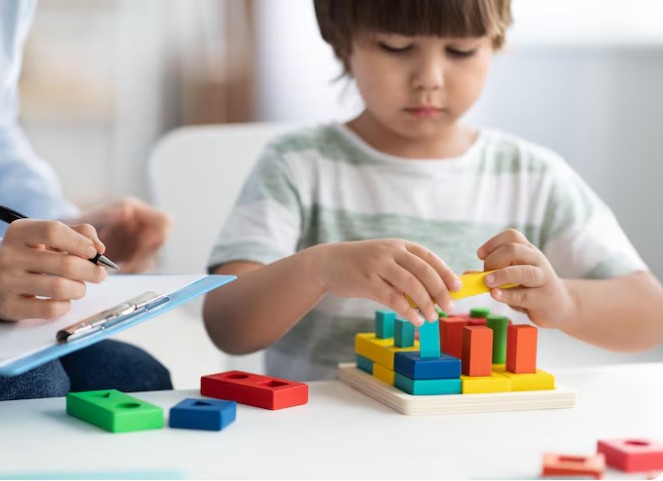
Choosing the right autism therapy for your child in North Carolina is a meaningful step toward supporting their growth and independence. By understanding the options available and working with qualified professionals, your family can build a therapy plan that meets your child where they are and helps them reach their full potential. Reach out to Sunny Skies ABA to explore personalized therapy options in Raleigh and across North Carolina.
Read More
Every parent wants their child to grow up with the confidence and ability to handle everyday tasks independently. For families of children with autism spectrum disorder (ASD) in North Carolina, applied behavior analysis offers a structured, evidence-based path toward building those essential daily living skills. From brushing teeth and getting dressed to following routines and communicating needs, ABA therapy breaks complex tasks into manageable steps that children can learn at their own pace.
Read More
By the time most families start asking about intensive support, they are already tired. Maybe your child gets hurt, or someone else does, when things get overwhelming, and school has started calling before lunch. Maybe you have tried a few hours a week and it has not been enough. None of that means you did something wrong, or that your child is a problem to be fixed.
Read More