
How can developmental ABA therapy in North Carolina truly unlock your child's potential and help them learn essential life skills? If you are a parent of a child with Autism Spectrum Disorder (ASD) or other developmental delays in North Carolina, especially around Raleigh, you might be seeking answers. You want to understand how therapy can make a tangible difference in their everyday life. This guide will explore the heart of effective ABA treatment: skill acquisition programs. We will demystify the process and show how these programs build crucial skills for a brighter future.
Raising a child with unique learning needs comes with both immense love and significant challenges. Parents often search for the most effective ways to help their child communicate, socialize, and become more independent. This search frequently leads them to applied behavior analysis, or ABA therapy. ABA therapy is an evidence-based approach that helps individuals learn new skills and reduce challenging behaviors. A key part of this therapy, especially in developmental ABA therapy North Carolina, is skill acquisition. It focuses on teaching new, functional abilities. Our goal is to empower children to engage more fully with
their world. This guide is specifically for Raleigh families, aiming to clarify exactly how these programs work.
Skill acquisition is more than just teaching new tricks; it's about systematically building abilities that enhance a child's independence and quality of life. In ABA therapy, a skill acquisition program is a structured plan. It helps a child learn specific behaviors or abilities they currently don't have. These skills might range from asking for a desired toy to having a conversation. The core principles guiding these programs are individualization, data-driven decisions, and positive reinforcement. Every program is unique to the child. It considers their strengths, needs, and interests. The ultimate goal is to empower children to live more independent and meaningful lives.
Implementing skill acquisition programs in ABA therapy is a thoughtful, multi-phase process. It ensures that therapy is tailored, effective, and continuously responsive to your child's progress. This journey begins with understanding your child and then building a personalized roadmap for their growth.
The first step in any effective developmental ABA therapy North Carolina program is a thorough assessment. This is where we get to know your child and your family. We listen to your concerns and hopes for your child's future. We conduct skill-based assessments, such as the VB-MAPP or ABLLS-R. These tools help identify your child's current strengths and areas where they could benefit from new skills. If challenging behaviors are present, a functional behavior assessment (FBA) helps us understand why they occur. This ensures we address both skill deficits and behavioral concerns.
Once we have a clear picture of your child's needs, we collaborate with you to design a personalized program. This involves setting clear, achievable goals. We use SMART goals: Specific, Measurable, Achievable, Relevant, and Time-bound. An example might be, "Child will request a preferred item using a two-word phrase within one month." We then develop specific learning objectives that break down these goals into smaller, manageable steps.
Our team selects the most effective instructional strategies for your child. These can include Discrete Trial Training (DTT) for structured learning or Natural Environment Teaching (NET) for learning in everyday situations. We also use task analysis to break complex skills into smaller steps and prompting hierarchies to guide your child towards independence.
This is where the learning happens. Our qualified therapists, Board Certified Behavior Analysts (BCBAs) and Registered Behavior Technicians (RBTs), deliver direct instruction. Many families in Raleigh choose in-home or clinic-based services, ensuring consistent practice. Therapists apply systematic instruction, breaking down skills and providing many practice opportunities. Positive reinforcement is crucial here; it's the engine that drives motivation. When your child uses a new skill, we reward them. This could be praise, a favorite toy, or an activity they enjoy. We also focus on generalization and maintenance. This means ensuring that skills learned in therapy can be used in different places, with different people, and last over time.
Data is at the heart of effective ABA therapy. We collect objective data on your child's progress for every skill we teach. This allows us to track every victory and identify areas that need adjustment. We might collect data on how often a skill occurs, how long it takes, or what happens before and after a behavior. BCBAs regularly review this data to make informed decisions about your child's program. If a skill isn't progressing as expected, the BCBA adjusts the teaching strategy. This ensures that your child is always on the most effective path to learning. It's a transparent process that keeps everyone informed about your child's development.
Developmental ABA therapy North Carolina programs aims to build a wide range of skills. These are vital for a child's overall development and integration into their community. We focus on areas that will have the biggest impact on their daily lives. We help children develop strong communication skills, including expressive (speaking or signing) and receptive (understanding) language. For non-verbal children, we can introduce Augmentative and Alternative Communication (AAC) methods. Social skills are another key area.
This includes learning turn-taking, making eye contact, initiating interactions, and practicing play skills, perhaps even during outings at local Raleigh parks. Daily living, or adaptive skills, are essential for independence. This includes self-care routines like dressing and hygiene, feeding skills, and community safety. We also address academic and pre-academic skills, such as following instructions and improving attention, preparing children for NC classrooms. Finally, motor skills, both fine and gross, can be integrated to support overall development.
Your involvement is incredibly valuable for the success of any developmental ABA therapy North Carolina program. We offer parent training programs to empower you. These programs teach you strategies to become an active partner in your child's growth. You learn how to use ABA principles to reinforce skills at home and in community settings. Open communication with your therapy team is vital. We encourage you to share observations, ask questions, and celebrate every milestone with us. By working together, we create a consistent and supportive learning environment for your child. Your active participation helps generalize skills learned in therapy to all aspects of your child's life.
The impact of well-designed skill acquisition programs extends far beyond learning individual behaviors. These programs lead to profound, lasting changes. They foster increased independence and self-sufficiency, giving children the tools to navigate their world more confidently. This ultimately leads to an enhanced quality of life and greater social inclusion. By teaching new, appropriate skills, we often see a significant reduction in challenging behaviors. This is because children learn effective ways to communicate their needs. These programs also prepare children for school and community integration in North Carolina. They equip them with the abilities needed to succeed in academic and social environments. The long-term impact on their future potential is truly remarkable.

When seeking developmental ABA therapy North Carolina, selecting the right provider is a crucial decision. Look for a provider with qualified BCBAs and RBTs. Ensure they emphasize individualized programs tailored to your child's unique needs. Strong family involvement and transparent communication are also key indicators of a quality provider. You might also consider whether in-home or clinic-based ABA options in Raleigh, NC, best suit your family's needs. Understanding insurance coverage for ABA therapy in North Carolina is another important step. At Sunny Skies ABA, we are dedicated to being your partner in skill development, providing compassionate, evidence-based care to Raleigh families. We strive to make the process clear and accessible, helping you navigate every step of your child's journey.
Skill acquisition programs within developmental ABA therapy are powerful tools. They provide children with autism and developmental delays the opportunity to learn, grow, and thrive. By systematically teaching essential communication, social, and daily living skills, we help children reach their fullest potential. This leads to a more independent and fulfilling life.
We understand the hopes and concerns that come with seeking therapy for your child. At Sunny Skies ABA, we are committed to providing exceptional care to families across North Carolina. Are you ready to begin your child's journey toward mastering new skills and building a brighter future? Contact us today for a free consultation. You can also download our guide to "Understanding Your Child's ABA Journey in North Carolina!"
How does an ABA skill acquisition program specifically help my child learn to communicate or socialize better, especially if they're non-verbal or struggle with social cues?
ABA programs break down complex communication and social skills into small, teachable steps. For non-verbal children, we might teach picture exchange systems (PECS) or introduce speech-generating devices. For social cues, we use role-playing, video modeling, and direct instruction, reinforcing positive interactions in real-life situations.
What is the actual day-to-day process of a skill acquisition session in Raleigh, and will my child just be sitting at a table, or will it be more natural and play-based?
Sessions are highly individualized and often a blend of both structured and naturalistic teaching. Some skills might be taught at a table for focused practice, while others are integrated into play and daily routines. In Raleigh, our therapists often use play-based activities to make learning fun and engaging, promoting skill generalization in natural settings.
How quickly can I expect to see progress in my child's skills, and what kind of commitment is required from me as a parent to help them succeed
In their ABA program?
The rate of progress varies for each child and depends on many factors, including the child's individual needs and the intensity of therapy. Consistent progress often takes time and patience, with small victories building into larger achievements. Your commitment as a parent, including participating in parent training and reinforcing skills at home, is crucial for maximizing your child's success and ensuring learned skills last.
My child struggles with transitioning between activities and following instructions at home. How do skill acquisition programs address these specific behavioral challenges through positive teaching rather than just punishment?
Skill acquisition programs address these challenges by teaching alternative, positive behaviors. Instead of punishment, we might teach your child how to communicate their needs or use a visual schedule to prepare for transitions. We use positive reinforcement to reward successful transitions and following instructions, making these behaviors more likely to happen in the future.
Beyond just learning new skills, how will an ABA skill acquisition program prepare my child for success in a typical North Carolina school environment, and will these skills truly transfer to real-life situations outside of therapy?
ABA skill acquisition programs focus on functional skills directly applicable to school and community settings. We teach skills like sitting appropriately, following group instructions, and social interaction necessary for a North Carolina classroom. Our emphasis on generalization ensures that these skills transfer and are used effectively in various real-life situations, promoting long-term success and independence.

Some families come to ABA therapy after a school calls asking them to pick up their child again. Some come because a meltdown turned physical and a pediatrician used the word "safety." Some come because they have already tried everything a lighter level of support recommended, and nothing has moved.
Read More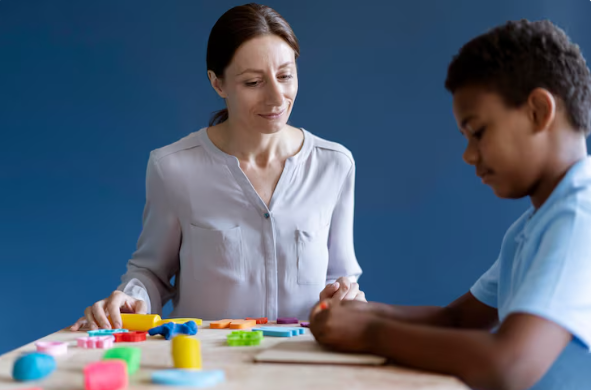
When a provider tells you your child will be working with a BCBA, you might smile and nod while quietly wondering what that actually means. You're not alone. Most families entering ABA therapy for the first time have no idea what the letters stand for, let alone what the person behind them does every week or why it matters so much for your child's outcomes.This guide breaks it down in plain language: what a BCBA is, how they earn that credential, what they do day to day, and - importantly - what questions to ask any ABA therapy specialist in North Carolina before you say yes to a provider.
Read MoreWhen your child has an Individualized Education Program, every line on that document carries weight, the goals, the services, the accommodations. As a parent navigating North Carolina's school system, you may have wondered whether the ABA therapy your child receives outside of school can do more than it's already doing. The answer is yes, and the connection between private ABA and your child's IEP is stronger than most families realize.
Read More