You’ve finally gotten your child’s autism diagnosis. The report is in English, the insurance calls are in English, and the therapist recommendations all assume English is the language your family lives in. But at home, your child hears Spanish at breakfast, with abuela on the phone, and at church on Sunday. So a very reasonable question comes up: Will ABA therapy work for my child if we don’t speak English at home?
It can, and for many families it works better when therapy respects the language your child actually uses. This guide explains what bilingual ABA therapy services in North Carolina look like, what the research says about raising an autistic child in two languages, and what to ask a provider before you enroll.
North Carolina is home to a large and growing multilingual community. According to the NC Office of State Budget and Management, about 12% of North Carolinians age 5 and older speak a language other than English at home, and roughly 775,000 people speak Spanish. In some counties the share is much higher: Spanish is spoken in about 1 in 5 homes in Duplin County, and in 16–18% of homes in Sampson, Lee, and Greene counties.
At the same time, autism is being identified more often. The CDC’s most recent surveillance report found that about 1 in 31 eight-year-olds in the U.S. has been identified with autism, and prevalence among Hispanic children is now at or above the rate for white children.
Put those two facts together and the need is clear: thousands of North Carolina children with autism are growing up in homes where English isn’t the main language. Yet families often report that finding a provider who can communicate with them comfortably is one of the hardest parts of getting started.
Bilingual ABA therapy is Applied Behavior Analysis delivered in a way that fits a child’s language environment. It uses the same evidence-based methods as any ABA program (assessments, individualized goals, positive reinforcement, and data tracking) but plans for which language each skill is taught in and who the child needs to communicate with.
In practice, that can include:
Bilingual ABA is not a different kind of therapy. It’s ABA that doesn’t ask your child, or you, to leave your language at the door.
This is one of the most common worries parents share, and many families have been told (sometimes by professionals) to “stick to English” to avoid confusion. The research doesn’t support that advice.
Systematic reviews of multilingual autistic children, including a 2015 review in the Review Journal of Autism and Developmental Disorders and a 2023 review in the journal Autism, found no evidence that bilingual exposure harms language development in children with autism. Bilingual autistic children generally develop language at a similar pace to monolingual autistic children, and some studies show benefits in areas like gestures and social communication.
There’s also a practical reason to keep your home language. If your child only learns to request, greet, and say “no” in English, but grandparents, siblings, and neighbors speak Spanish, those skills won’t help much at the dinner table. Studies of Spanish-speaking children receiving behavioral instruction have found that some children respond more accurately, and show fewer challenging behaviors, when they’re taught in the language they hear most at home.
The bottom line: you don’t have to choose between your culture and your child’s progress.
Every program is individualized, but here’s what bilingual ABA often looks like for North Carolina families.
Before treatment begins, a Board Certified Behavior Analyst (BCBA) assesses your child’s communication, social, daily living, and behavior skills. In a bilingual program, the BCBA also asks:
Goals are written around real routines. A child might learn to request snacks in Spanish at home and in English at preschool, or learn to answer “¿Cómo te llamas?” and “What’s your name?” Both count, because both help your child connect with the people around them.
Sunny Skies ABA provides in-home and community-based therapy, which is especially helpful for bilingual families. Your child practices skills in the environment where your family’s language is naturally spoken, with the people and routines that matter most.
Parent involvement is one of the strongest predictors of progress in ABA. Sunny Skies includes regular parent training sessions so caregivers can use the same strategies throughout the week. Ask your provider whether parent training can be held in your preferred language.
Data is at the heart of ABA. You should receive progress updates in a language you can read and discuss comfortably, and you should never feel you have to nod along to a report you don’t understand.
Language services don’t change how ABA is covered. Bilingual ABA is billed the same way as any other ABA program.
NC Medicaid. North Carolina Medicaid covers ABA (called Research-Based Behavioral Health Treatment) for eligible children and young adults under 21 with an autism diagnosis. Sunny Skies works with NC Medicaid Direct and plans including AmeriHealth Caritas, Carolina Complete Health, Healthy Blue NC, WellCare, and AmBetter, as well as Tailored Plans such as Alliance Health, Partners Health, Trillium Health Resources, and Vaya Health. Medicaid health plans are also required to offer free interpreter services to members, so you can ask for help in Spanish when you call.
Private insurance. Under North Carolina’s autism insurance law (SB 676, often called Robin’s Law), many state-regulated plans must cover ABA for children 18 and younger, with an annual benefit of up to $40,000. Sunny Skies accepts Aetna and Blue Cross Blue Shield of North Carolina, among others.
Help with the paperwork. Insurance can be confusing in any language. Sunny Skies’ insurance support team can check your benefits, explain costs, and help with prior authorization. At Sunny Skies, intake can be conducted in Spanish.
For more detail, read our guides on whether ABA is covered by Medicaid in North Carolina and how much ABA therapy costs in NC.
Not every provider that says “bilingual” offers the same level of support. Ask these questions before you enroll:
A good provider will welcome these questions and answer them clearly. For more on this topic, see our overview of bilingual ABA therapy services in North Carolina and our guide to Spanish-speaking ABA therapy services in NC.
Sunny Skies ABA serves families in communities across the state, including Raleigh, Durham, Charlotte, Greensboro, Sanford, Fayetteville, and Wilmington. Many of these areas have large Spanish-speaking populations. Sanford, in Lee County, is one of the counties with the highest share of Spanish-speaking households in the state.
Sunny Skies works to match bilingual families with Spanish-speaking clinical staff whenever possible. You can see every city we serve on our North Carolina locations page.
Alongside therapy, these free resources can help:
Yes. Some NC providers offer ABA sessions and parent training in Spanish, either with bilingual clinicians or through interpreters. Ask each provider exactly how language support works before you enroll. At Sunny Skies ABA, intake can be conducted in Spanish, and we work to match families with Spanish-speaking clinical staff whenever possible.
Research shows bilingual exposure does not harm language development in children with autism. Keeping your home language can actually help your child connect with family and use skills in daily life.
Most experts now advise against this. Speak the language you’re most comfortable using, since that’s where your child gets the richest, most natural interaction from you.
Yes. NC Medicaid covers ABA for eligible children under 21, and the language therapy is delivered in doesn’t change coverage. Medicaid plans must also provide free interpreter services.
Ask whether they use trained interpreters for parent meetings and training, and whether written materials can be translated. Clear communication with caregivers is essential to good ABA.
Your child deserves therapy that fits who they are, including the language they hear from the people who love them most. At Sunny Skies ABA, our BCBAs and RBTs build individualized, family-centered programs delivered at home and in the community, with parent training that helps your whole family grow together.
Ready to talk about your child’s needs? Call (919) 502-1112, email info@sunnyskiesaba.com, or book a free consultation to get started.
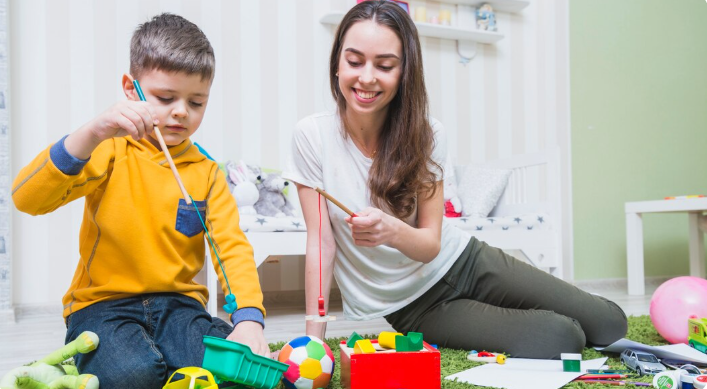
Live in a small North Carolina town? Learn how rural families can find ABA therapy providers, what NC Medicaid and private insurance cover, and how in-home ABA closes the distance gap.
Read More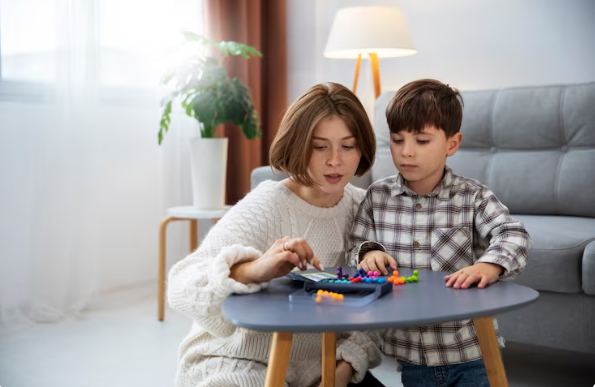
Your child has been in ABA therapy for a while, and then the mail brings a kindergarten registration packet. Or the service coordinator mentions, almost in passing, that everything changes when your child turns three. Either way, the same worry shows up at midnight. Is my kid ready for a classroom, and what happens to therapy? ABA therapy for transition planning in North Carolina exists for exactly this stretch of time. Done well, it does not begin the week before the first bell. It starts months earlier, targets the skills a classroom asks for, and steps back gradually instead of stopping at once.
Read More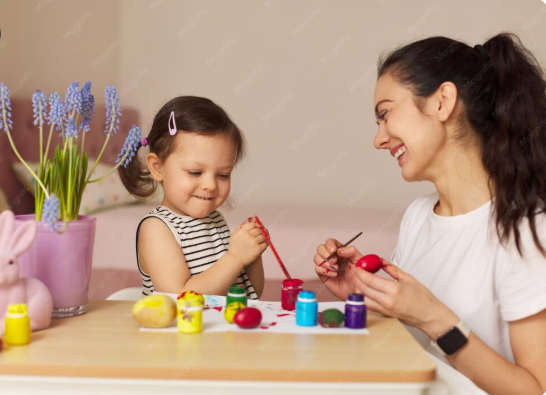
You have counted the words. Maybe there are three of them, maybe none, and maybe there were a few at eighteen months that quietly went away. At the playground, other children ask for a turn while your child pulls your hand toward the swing. If you are searching for ABA therapy for nonverbal children in NC, you are probably carrying two questions at once: will my child ever talk, and what do we do in the meantime?
Read More