You have counted the words. Maybe there are three of them, maybe none, and maybe there were a few at eighteen months that quietly went away. At the playground, other children ask for a turn while your child pulls your hand toward the swing. If you are searching for ABA therapy for nonverbal children in NC, you are probably carrying two questions at once: will my child ever talk, and what do we do in the meantime?
Both questions deserve a straight answer. Speech and communication are not the same thing, and a good program works on both. Your child has things to say right now, before any first word arrives.
"Nonverbal" is the phrase most parents type into a search bar, and the one clinicians and insurers still use. Many autistic adults prefer "nonspeaking," because "nonverbal" implies a person has no language at all, which is usually untrue. "Minimally verbal" describes a child with very few words, or who uses words inconsistently.
Researchers estimate that roughly 25 to 30 percent of autistic people are nonverbal or minimally verbal. The CDC's autism data and research reported that about 1 in 31 eight year old children in the US was identified with autism spectrum disorder based on 2022 data.
Now the part worth saying loudly. Not speaking tells you almost nothing about what a child understands, feels, or can learn. Many nonspeaking children absorb far more than the adults around them assume.
Speech is the physical act of making sounds with the mouth. Communication is getting a message from inside your child's head into someone else's. Language is the system underneath both.
A child can be a strong communicator with zero speech, and a child with clear words can still struggle to ask for help. Once you separate these ideas, therapy goals make more sense and progress becomes something you can see.
The hand pulled toward the pantry is a request. The scream at bath time is a protest. The drop to the floor in the grocery aisle may be "this is too loud" or "I want that."
Behavior that works gets repeated, which is the idea behind the four functions of behavior in ABA therapy. So the job is not to shut the behavior down. It is to give your child a faster route to the same result, one other people can understand.
Functional communication training, usually shortened to FCT, is often the highest impact piece of a program for a nonspeaking child. It starts with figuring out what a behavior accomplishes. Then the team teaches a communication response that gets the same outcome with less effort and more speed.
If screaming reliably produces a cookie, screaming is efficient. If a picture of the cookie works faster and every single time, the picture wins.
A mand is simply a request. Mand training teaches your child to ask for things they already want, using whatever method they can manage today: a sign, a picture, a button on a device. Therapists start here because the payoff is immediate. Asking gets you the thing, so asking is worth doing again.
Augmentative and alternative communication, or AAC, covers anything that supports or replaces speech. Most children use more than one method depending on the setting.
Method | What it looks like | Often a good fit for
Picture exchange | Hands a picture card to an adult to request an item | Early learners who need a concrete, low tech start
Speech generating device | Tablet or device that speaks when icons are pressed | Children who need a large vocabulary and want strangers to understand
Sign and gesture | Simplified signs, pointing, tapping, leading | Children with good motor skills who need something always available
Vocal approximations | Partial words or consistent sounds shaped over time | Children already making sounds with intent
Our therapy tools and resourcesshows what several of these systems look like in practice.
This is the fear almost every parent raises, and it is a reasonable one. The research does not support it. Studies of AAC use in autistic children generally find spoken language either unchanged or improved, not suppressed. Communication that succeeds builds motivation, and vocal attempts often ride along with it.
These two services are not competing for your child. A speech language pathologist works on articulation, oral motor skills, feeding, and the structure of language. An ABA team works on motivation, reinforcement, and making sure a skill learned at the table also shows up at Grandma's house.
The best results happen when both teams use the same AAC system, the same core vocabulary, and shared goals. Ask your providers whether they coordinate, and how often. Our ABA therapy services are built around that collaboration.
If your child is under three, North Carolina's 16 Children's Developmental Services Agencies deliver the NC Infant-Toddler Program, the usual front door for early communication support. Families often pair that with private services, and our early learning support page explains how the two fit together.
Once your child turns three, public schools take over the educational side through IDEA. The NC DPI Exceptional Children Division oversees that, and an IEP can include speech services and AAC access at school.
For funding, NC Medicaid covers ABA under Clinical Coverage Policy 8F. Services require prior approval, and the treatment plan must be written by a Licensed Qualified Autism Service Provider and reviewed at least once every six months. Commercial plans differ widely, so verify your own benefits before you start.
The first milestone is rarely a word. It is usually one request, made the same way, several days in a row. That single reliable mand is the foundation everything else gets built on.
From there, progress widens before it deepens: more requests, then requests to more people, then requests in new places. Some children go on to fluent speech, some use a mix of speech and a device, and some remain full time AAC users who communicate beautifully. All three are wins, and your team should track data that shows which way things are moving.
Some do and some do not, and no honest provider can promise either outcome. What is clear is that building a reliable communication system first tends to help rather than hurt spoken language. Progress depends on your individual child, their age at start, and how consistently the plan is followed at home.
Yes. ABA programs do not require speech to begin. Assessment looks at what your child already does to get needs met, and early goals focus on requesting through whatever method your child can use today, whether that is a picture, a sign, or a device.
No, research does not support that concern. Reviews of AAC use in autistic children generally show spoken language holding steady or improving alongside device use. Giving a child a way to be understood tends to increase motivation to communicate in every form, including vocally.
Many children benefit from both, and the two services target different pieces. Speech language pathologists focus on articulation, oral motor skills, and language structure. ABA teams focus on motivation, consistency, and carrying skills into everyday life. Ask both providers how they will coordinate.
NC Medicaid covers ABA under Clinical Coverage Policy 8F for children with an autism spectrum disorder diagnosis. Services require prior approval and a treatment plan written by a Licensed Qualified Autism Service Provider, reviewed at least every six months. Coverage details can change, so confirm your child's benefits before scheduling.
It varies a great deal, and honest programs measure progress in weeks rather than promising a date. Many families notice a first consistent request sooner than expected, often for a favorite snack or toy, because motivation drives early manding. Your team should show you data at regular intervals.
If you are somewhere between worried and overwhelmed, that is a normal place to be. You do not have to sort out picture systems, devices, and insurance rules alone.
You are welcome to book a consultation with Sunny Skies ABA and tell us about your child. We will listen, answer your questions honestly, and walk you through the options for families across North Carolina.
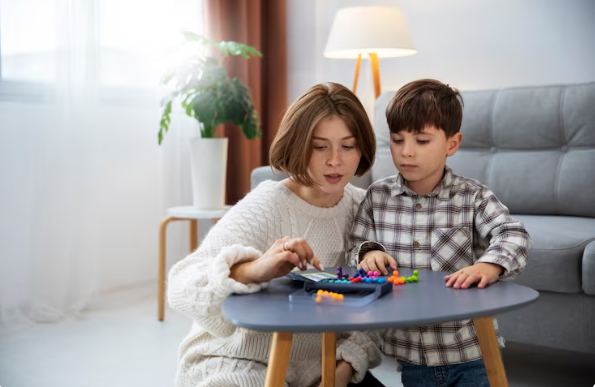
Your child has been in ABA therapy for a while, and then the mail brings a kindergarten registration packet. Or the service coordinator mentions, almost in passing, that everything changes when your child turns three. Either way, the same worry shows up at midnight. Is my kid ready for a classroom, and what happens to therapy? ABA therapy for transition planning in North Carolina exists for exactly this stretch of time. Done well, it does not begin the week before the first bell. It starts months earlier, targets the skills a classroom asks for, and steps back gradually instead of stopping at once.
Read More
Some families come to ABA therapy after a school calls asking them to pick up their child again. Some come because a meltdown turned physical and a pediatrician used the word "safety." Some come because they have already tried everything a lighter level of support recommended, and nothing has moved.
Read More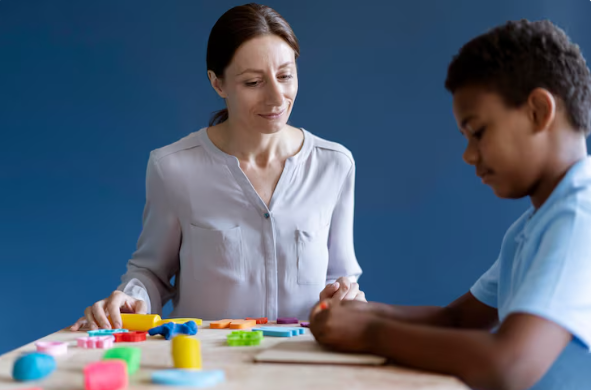
When a provider tells you your child will be working with a BCBA, you might smile and nod while quietly wondering what that actually means. You're not alone. Most families entering ABA therapy for the first time have no idea what the letters stand for, let alone what the person behind them does every week or why it matters so much for your child's outcomes.This guide breaks it down in plain language: what a BCBA is, how they earn that credential, what they do day to day, and - importantly - what questions to ask any ABA therapy specialist in North Carolina before you say yes to a provider.
Read More