
When you picture ABA therapy, you might imagine a clinic with therapy rooms and a waiting area. But for a lot of North Carolina families, the most effective place for therapy is the one your child already knows best: home. In-home ABA brings a trained therapy team into your house, where your child learns skills in the exact setting they will use them.
In-home ABA is not a lesser version of clinic care. For the right child it is the stronger option, because skills practiced at the kitchen table or during the bedtime routine tend to stick better than skills practiced in an unfamiliar room. For other children, a clinic offers things a home cannot. Knowing the difference is what this guide is about.
Below, we cover how in-home ABA actually works across North Carolina, who it suits, how it compares to clinic-based care, and how families here pay for it.
In-home ABA follows the same clinical structure as any quality ABA program. A Board Certified Behavior Analyst (BCBA) assesses your child, designs an individualized treatment plan, and oversees the work. A Registered Behavior Technician (RBT) delivers most of the hands-on sessions in your home under that supervision.
What makes it different is the setting. Instead of practicing a skill in a clinic and hoping it transfers home, the therapist teaches it where it matters. Mealtime becomes a chance to work on communication or self-feeding. Getting dressed becomes a daily-living goal. A sibling conflict becomes a real opportunity to practice social skills. The home is full of natural teaching moments that a clinic has to simulate.
Parents are active participants rather than bystanders. Your therapist coaches you to reinforce skills between sessions, which is one of the biggest advantages of working in your own space. Our guide on how parents can support ABA therapy at home explains how that partnership works in practice.
The case for in-home ABA comes down to a few concrete advantages that matter to families across North Carolina.
• Skills generalize faster. Because your child learns in the place they live, there is no gap between the therapy setting and real life. The skill is practiced where it will be used.
• Less stress and disruption. No commute, no unfamiliar waiting room, and a child who is often calmer and more focused in familiar surroundings.
• The whole family is involved. Therapists can teach siblings to interact positively and coach parents directly, building a support system that continues after each session ends.
• Real-world problem solving. Challenging behaviors that show up at home, like bedtime resistance or mealtime struggles, get addressed in the exact moment and place they happen.
Neither setting is better in the abstract. They serve different needs, and the honest answer depends on your child.
In-home ABA is often the stronger fit when daily-living skills and family routines are the priority, when your child is calmer in familiar surroundings, or when travel to a clinic is a real barrier. Clinic-based ABA has its own strengths: a structured environment with fewer household distractions, specialized equipment, and built-in opportunities for peer interaction and group social skills. Some children do best with a hybrid, splitting time between home and clinic as their goals shift.
A good BCBA will recommend a setting based on your child's assessment, not on what is most convenient for the provider. If a clinic only offers center-based care or a home agency only offers in-home, that is worth knowing before you commit.
Access to in-home ABA varies across the state. Participation tends to be higher in and around the larger metros and lower in rural counties, where there are simply fewer providers covering more ground. That does not mean rural families are out of options, but it does mean the search can take longer and may involve providers who serve multiple counties.
If you are in the Triangle, our detailed guide to in-home ABA therapy in Raleigh covers what to expect locally, including insurance navigation and questions to ask providers. Families elsewhere in the state can apply the same framework to providers in their own area.
Wherever you are, the priorities are the same: confirm the provider supervises with a real BCBA presence, ask about staffing consistency so your child is not constantly meeting new technicians, and make sure the schedule is one you can sustain. A reliable provider you can access consistently will serve your child better than an excellent one with an impossible schedule.
In-home ABA is covered the same way as clinic-based ABA. State-regulated private insurance plans must cover ABA under NC Senate Bill 676 (Robin's Law), generally for children under 19, often with an annual benefit cap around $40,000. The setting does not change the coverage.
North Carolina Medicaid also covers ABA for eligible children based on medical necessity. You can read the current rules in our explainer on whether ABA therapy is covered by Medicaid in North Carolina. As always, confirm that your chosen provider is in network and ask their intake team to verify your specific benefits before sessions begin.
Is in-home ABA as effective as clinic-based therapy?
Yes, and for some goals it is more effective. In-home ABA helps children generalize skills to real life because they learn in the setting where the skills are used. Clinic-based care has its own strengths, such as peer interaction, so the better choice depends on your child's needs.
How many hours per week does in-home ABA involve?
It depends on your child's needs and goals. Comprehensive programs often run 25 to 40 hours per week, while focused programs run fewer. Your child's BCBA recommends a specific number after the initial assessment.
Do I need to be home during sessions?
Usually a parent or caregiver is present, especially early on, since family involvement is a core part of in-home ABA. Your therapist will coach you to reinforce skills between sessions, which is one of the model's biggest advantages.
How do I prepare my home for therapy?
You do not need a dedicated therapy room. A relatively distraction-free space for some structured activities helps, but much of the work happens throughout your home. The RBT brings the materials they need, so the main thing to prepare is a willingness to collaborate.
Is in-home ABA available in rural North Carolina?
It can be, though options are more limited than in metro areas. Some providers serve multiple counties or offer telehealth to extend a BCBA's reach. Starting your search early and getting on multiple waitlists improves your chances of finding a consistent provider.
In-home ABA gives many North Carolina families the most natural place for their child to learn, with skills built into the routines of daily life and parents brought in as partners. Whether it is the right primary setting comes down to your child's goals and an honest assessment.
To talk through whether in-home therapy fits your family, book a consultation with Sunny Skies ABA and our BCBA team will help you decide between in-home, clinic, or a combination.

Raising a child with autism in a Spanish-speaking or multilingual home? Learn what bilingual ABA therapy looks like in North Carolina, what research says about two languages, and what to ask providers.
Read More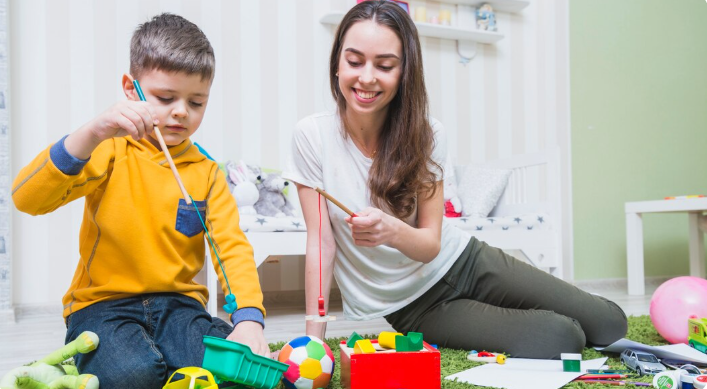
Live in a small North Carolina town? Learn how rural families can find ABA therapy providers, what NC Medicaid and private insurance cover, and how in-home ABA closes the distance gap.
Read More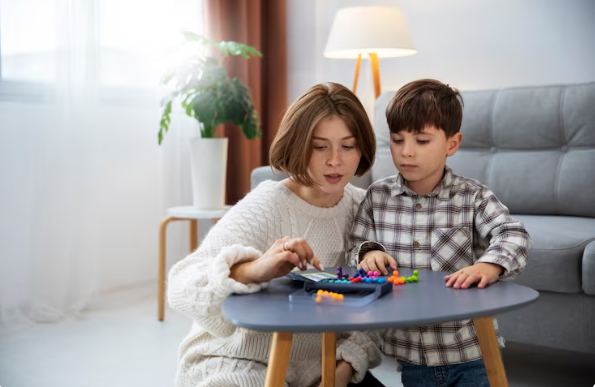
Your child has been in ABA therapy for a while, and then the mail brings a kindergarten registration packet. Or the service coordinator mentions, almost in passing, that everything changes when your child turns three. Either way, the same worry shows up at midnight. Is my kid ready for a classroom, and what happens to therapy? ABA therapy for transition planning in North Carolina exists for exactly this stretch of time. Done well, it does not begin the week before the first bell. It starts months earlier, targets the skills a classroom asks for, and steps back gradually instead of stopping at once.
Read More