
Are you a parent in Raleigh, NC, navigating the world of autism spectrum disorder (ASD) or developmental delays for your child?
Finding the right support and understanding the various therapy options can feel overwhelming. Many families in our community seek effective ways to help their children learn new skills, communicate better, and thrive.
One powerful tool within Applied Behavior Analysis (ABA) therapy is Discrete Trial Training, often called DTT. This method is widely used and highly effective for teaching a wide range of skills to children with autism.
At Sunny Skies ABA, we are committed to helping Raleigh families understand and access the best possible support for their children. This guide will walk you through what DTT is, how it works, and why it's a key component of many successful ABA programs.
Discrete Trial Training is a highly structured teaching method used in ABA therapy. Think of it as breaking down complex skills into very small, manageable steps. Each step is taught individually and repeatedly until your child masters it.
This approach focuses on teaching skills in a clear, consistent, one-on-one setting. The goal is to make learning efficient and successful, building a strong foundation for more complex behaviors.
The core of DTT involves a rapid-paced interaction between a therapist and your child. It uses positive reinforcement to encourage correct responses, making learning a rewarding experience.
Every discrete trial follows a simple three-part sequence, often called the "ABC" model. Understanding this cycle helps parents grasp the consistency and predictability inherent in DTT.
This cycle is repeated many times, giving your child numerous opportunities to practice and learn. Consistent reinforcement helps them understand which responses are correct and encourages them to repeat those behaviors.
Let's imagine a child learning to identify colors. The therapist might hold up a red card.
The antecedent would be the therapist saying, "What color is this?" and presenting the red card. The child's behavior might be saying "Red!" or pointing to the red card. If correct, the consequence is immediate praise, like "Great job! That's red!" along with a quick tickle or a chance to play with a preferred item for a moment.
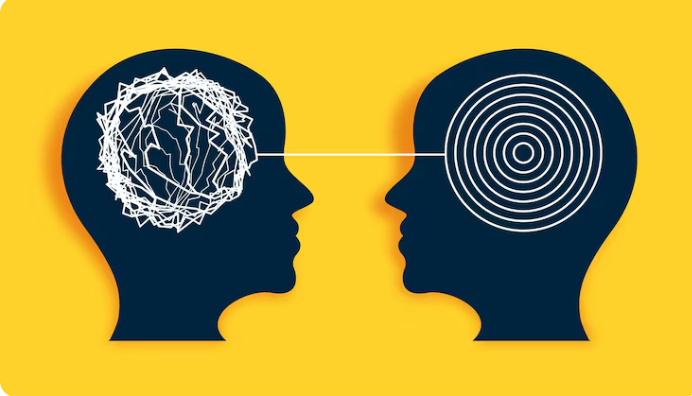
If the child says "Blue," the therapist might gently say, "Try again, it's red," and then guide the child's hand to the red card. They would then repeat the original instruction, "What color is this?" to give the child another chance to respond correctly.
DTT offers numerous advantages, making it a valuable part of an ABA program, especially for children who struggle with learning in less structured environments. Its systematic approach can lead to significant progress.
DTT is excellent for teaching fundamental skills that are essential for future learning. These can include imitation (copying actions), receptive language (understanding instructions), expressive language (using words), matching, early academic skills, and even basic self-help tasks.
By mastering these building blocks, children gain the tools they need to engage more effectively with their world. These foundational skills are crucial for later development of more complex social and communication abilities.
One of the strengths of DTT is its data-driven nature. Therapists meticulously record your child's responses to each trial. This means you and your therapy team can see exactly what your child is learning, how quickly, and where they might need more support.
This data provides tangible evidence of progress, which can be incredibly encouraging for parents. It also allows the therapy team to adjust the program in real time to ensure it remains effective and tailored to your child's needs.
Children with autism often thrive on predictability. DTT provides a highly consistent and structured learning environment, which can reduce anxiety and help your child focus. The clear beginning, middle, and end of each trial help them understand expectations.
This consistency across trials and therapists ensures that your child is receiving the same clear instructions and reinforcement, regardless of who is working with them. This aids in faster and more robust learning.
By effectively teaching new, appropriate skills through DTT, we often see a reduction in challenging behaviors. When a child learns to communicate their needs or engage appropriately, they have less reason to use problematic behaviors.
For example, teaching a child to verbally request a desired item can reduce instances of crying or grabbing. DTT empowers children with functional alternatives, leading to more positive interactions and overall improved behavior.
Discrete Trial Training is one of the most thoroughly researched and empirically supported interventions for individuals with autism. Decades of research have consistently demonstrated its effectiveness in teaching new skills across various domains.
Organizations like the National Autism Center and the Association for Science in Autism Treatment endorse DTT as an established intervention. This means parents can be confident that DTT is a proven method for positive change.
As parents explore DTT, it's natural to have questions and encounter various perspectives. Let's address some common concerns to provide a clearer picture of modern DTT practices.
This is a common concern. While DTT is structured, modern ABA therapy, including that provided by Sunny Skies ABA, emphasizes integrating DTT with naturalistic teaching strategies (like Natural Environment Teaching, or NET). DTT builds the initial skill, and then NET helps generalize it to real-world, natural situations.
Our therapists ensure sessions are engaging and child-led where appropriate, incorporating play and your child's motivations. The goal is always for skills learned in structured settings to transfer smoothly to everyday life, not to create "robotic" responses.
While DTT is incredibly effective in early intervention, it is not limited to young children. DTT can be adapted and utilized for individuals across the age spectrum, from toddlers to teenagers and even adults. It's particularly useful when a specific skill deficit needs to be addressed in a focused, systematic way.
For older children, DTT might focus on more complex academic tasks, vocational skills, or advanced social nuances. The principles remain the same: breaking down skills, repeated practice, and positive reinforcement.
The effectiveness of DTT largely depends on the skill and compassion of the therapist. Our Board Certified Behavior Analysts (BCBAs) and Registered Behavior Technicians (RBTs) at Sunny Skies ABA are highly trained.
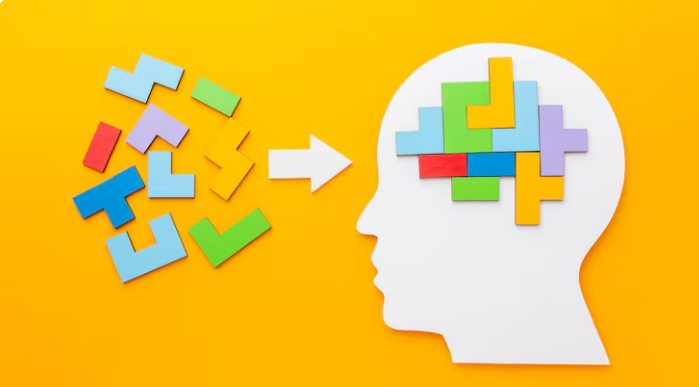
They understand how to present instructions clearly, deliver reinforcement effectively, collect accurate data, and adapt teaching methods to keep your child engaged. They build rapport and create a positive learning environment, ensuring the structured nature of DTT is balanced with warmth and responsiveness.
Choosing Sunny Skies ABA for your child's DTT journey means partnering with a team dedicated to personalized, effective care right here in Raleigh.
Every child is unique, and so is every treatment plan. Our BCBAs conduct thorough assessments to identify your child's strengths and areas for growth. Based on this, we develop a highly individualized plan that incorporates DTT for specific skill acquisition goals.
This plan is a living document, constantly adjusted based on your child's progress and evolving needs. We work closely with Raleigh families to ensure the goals are meaningful and relevant to your child's life.
Sunny Skies ABA offers flexible service delivery options in Raleigh, NC. DTT can be implemented effectively in various settings:
Your involvement as a parent is crucial for your child's success with DTT. You are your child's first and most important teacher. We encourage you to:
We provide ongoing parent training and support to empower you with the knowledge and skills to confidently support your child's learning every day.
At Sunny Skies ABA, DTT is a powerful tool, but it's part of a broader, comprehensive ABA program. We integrate DTT with other evidence-based strategies like Natural Environment Teaching (NET), Pivotal Response Treatment (PRT), and functional communication training.
This holistic approach ensures your child develops a wide range of skills—from discrete academic tasks to spontaneous social interactions—leading to well-rounded, functional development. Our focus is on teaching skills that enhance their quality of life in Raleigh and beyond.
Choosing an ABA provider for your child is a significant decision. It's important to find a team that aligns with your family's values and provides high-quality, ethical care.
When searching for ABA therapy providers in Raleigh, consider these key factors:
Many parents worry about the cost of ABA therapy, including DTT. In North Carolina, state mandates generally require most private health insurance plans to cover ABA therapy for autism. Medicaid also often covers these services.
Navigating insurance can be complex. Sunny Skies ABA has a dedicated team that can help Raleigh families understand their benefits, verify coverage for DTT and other ABA services, and assist with the authorization process. Our goal is to make accessing necessary care as smooth as possible for you.
At Sunny Skies ABA, we pride ourselves on being a trusted partner for families in the Raleigh, NC area. Our team of expert BCBAs and RBTs brings both extensive experience and deep compassion for every child's journey.
We combine the proven effectiveness of DTT with a personalized, holistic approach, always prioritizing your child's well-being and progress. Our commitment to local families, transparent communication, and dedication to evidence-based practices make us a leading choice for ABA therapy in our community.
Understanding Discrete Trial Training (DTT) is a vital step for any parent exploring ABA therapy for their child with autism or developmental delays. DTT stands as a powerful, evidence-based method for teaching essential skills, offering clarity, consistency, and measurable progress.
It's a foundational component within a comprehensive ABA program, designed to help your child achieve greater independence and engagement with the world around them. Remember, DTT is most effective when integrated into a personalized plan and supported by a compassionate, expert team and involved parents.
If you're in Raleigh, NC, and want to learn more about how DTT and our comprehensive ABA services can benefit your child, we invite you to connect with us. Take the next step towards empowering your child's potential.
My child struggles to learn new skills in general settings. Can DTT really help them pick up things like communication or self-help tasks effectively, and will they actually *use* those skills outside of therapy in Raleigh?
Yes, DTT is specifically designed for children who find learning challenging in unstructured environments. It breaks skills into small, teachable steps, providing clear instructions and immediate feedback. Sunny Skies ABA focuses on systematically generalizing these learned skills, meaning we intentionally plan activities and practice sessions in various settings, with different people in Raleigh, to ensure your child can use their new abilities broadly.
I've heard DTT can be very structured. How does Sunny Skies ABA ensure it's still fun and engaging for my child, especially if they have a short attention span, and not just 'robot-like' training?
While DTT is structured, our therapists at Sunny Skies ABA are experts at making it engaging. We incorporate your child's favorite toys, activities, and motivators as positive reinforcement. Sessions are dynamic and interactive, often feeling like a game. We blend DTT with naturalistic teaching to ensure learning is balanced, positive, and adapted to your child's individual attention span and learning style, making it far from robotic.
What's my role as a parent in DTT? Will I be expected to run sessions at home, and how will Sunny Skies ABA support me in understanding and consistently applying these techniques in our daily life in Raleigh?
Your role as a parent is crucial and collaborative, not about running formal sessions on your own. We involve you through observation, regular communication, and hands-on parent training. Sunny Skies ABA will teach you practical strategies to reinforce skills naturally during daily routines at home in Raleigh. Our goal is to empower you to support your child's learning journey consistently, making therapy gains stick in real-life situations.
My insurance is a maze. How do I know if DTT within ABA therapy is covered by my plan in North Carolina, and what steps does Sunny Skies ABA take to help families navigate the insurance process?
We understand that insurance can be confusing. In North Carolina, many private insurance plans and Medicaid are mandated to cover ABA therapy, which includes DTT. Sunny Skies ABA has a dedicated administrative team experienced in navigating NC insurance policies.
We will work with you to verify your benefits, explain coverage details, and assist with pre-authorizations, helping to ensure you can access the care your child needs with as little hassle as possible.
If DTT helps my child learn a specific skill, how will Sunny Skies ABA make sure they can use that skill with different people, in different places (like school or the park in Raleigh), and not just with their therapist in a structured setting?
Ensuring generalization is a cornerstone of our ABA programs at Sunny Skies ABA. After a skill is mastered through DTT, we systematically teach your child to apply it in varied contexts. This includes practicing with different therapists, family members, in various locations like home, community settings, or school in Raleigh, and using different teaching materials. Our comprehensive approach ensures skills become functional and applicable across all aspects of your child's life.

Choosing the right autism therapy for your child in North Carolina is a meaningful step toward supporting their growth and independence. By understanding the options available and working with qualified professionals, your family can build a therapy plan that meets your child where they are and helps them reach their full potential. Reach out to Sunny Skies ABA to explore personalized therapy options in Raleigh and across North Carolina.
Read More
Every parent wants their child to grow up with the confidence and ability to handle everyday tasks independently. For families of children with autism spectrum disorder (ASD) in North Carolina, applied behavior analysis offers a structured, evidence-based path toward building those essential daily living skills. From brushing teeth and getting dressed to following routines and communicating needs, ABA therapy breaks complex tasks into manageable steps that children can learn at their own pace.
Read More
By the time most families start asking about intensive support, they are already tired. Maybe your child gets hurt, or someone else does, when things get overwhelming, and school has started calling before lunch. Maybe you have tried a few hours a week and it has not been enough. None of that means you did something wrong, or that your child is a problem to be fixed.
Read More